Domiciliary Care Staff Training Requirements 2026
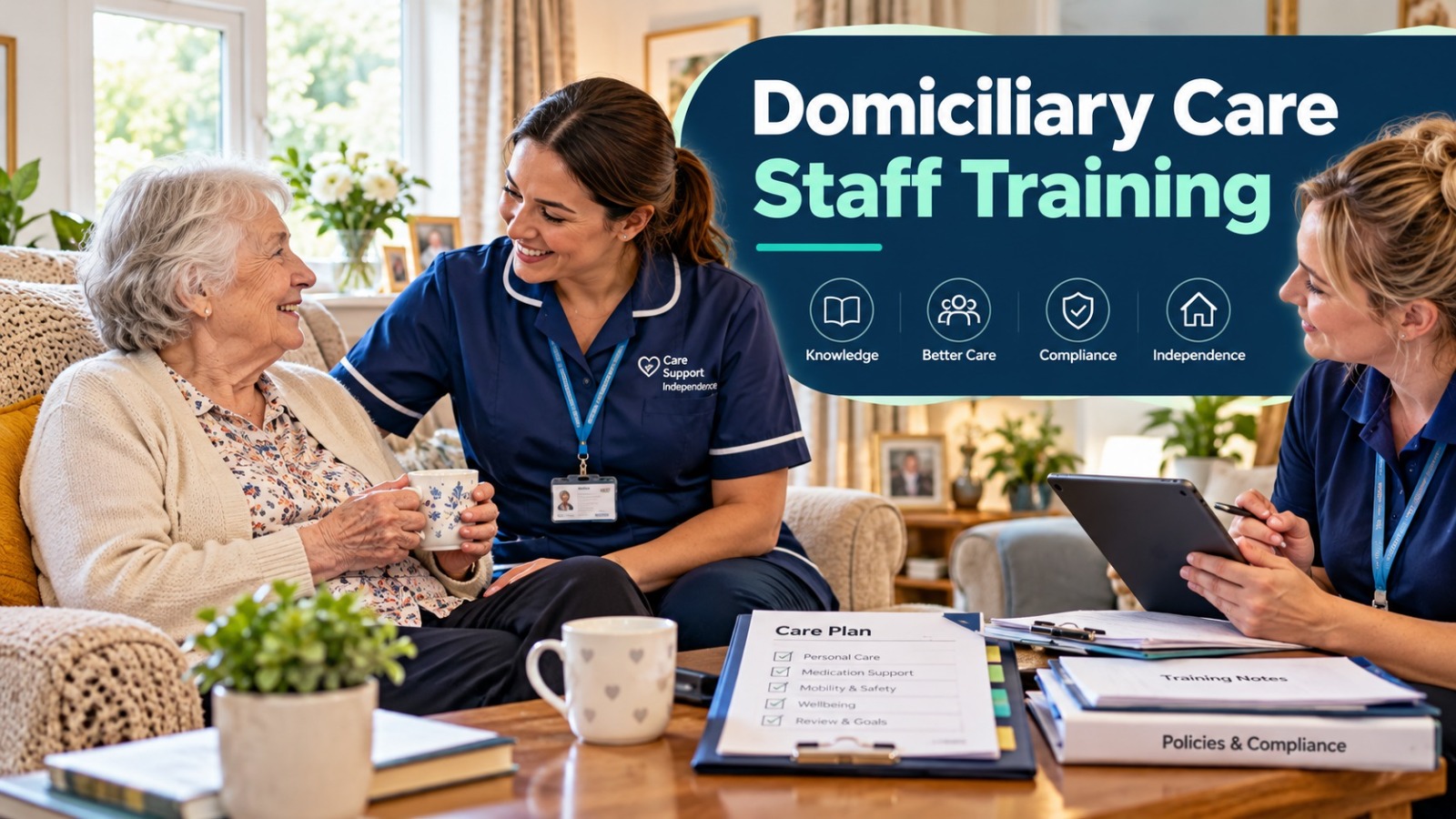
Domiciliary Care Staff Training Requirements 2026: A Practical Guide for Employers
Running a domiciliary care service means supporting people safely in their own homes while managing a mobile workforce with different responsibilities. For registered managers, care coordinators and home care agency owners, understanding domiciliary care staff training requirements is therefore an important part of compliance and service quality. The objective is not simply to collect certificates; employers need to make sure workers have the knowledge, skills and competence required for their roles and the people they support.
CQC Regulation 18 requires providers to ensure staff receive appropriate training, supervision and professional development. CQC’s current guidance for home care agencies also expects providers to demonstrate how their staff training arrangements address Care Certificate standards, statutory and regulatory requirements, and the needs of people using the service.
What Training Do Domiciliary Care Workers Need?
There is no single identical training list that applies to every home care worker. Training should reflect the employee’s duties, previous experience, regulated activities and the needs of the people receiving care. A strong domiciliary care compliance training programme should therefore combine core learning with role-specific and service-user-specific development.
Skills for Care’s current statutory and mandatory training guidance identifies important areas including health and safety, fire safety, moving and handling, infection prevention and control, and safeguarding. Medication administration and food hygiene may also be required where they are relevant to an employee’s responsibilities.
Core Mandatory Training for Domiciliary Care Staff
Safeguarding Adults Training
Safeguarding is central to safe home care. Workers should be able to recognise possible abuse, neglect or unsafe practice, understand how to respond and know their organisation’s reporting and escalation procedures. Safeguarding adults training should be appropriate to the employee’s responsibilities and reinforced through clear policies and supervision.
Moving and Handling Training
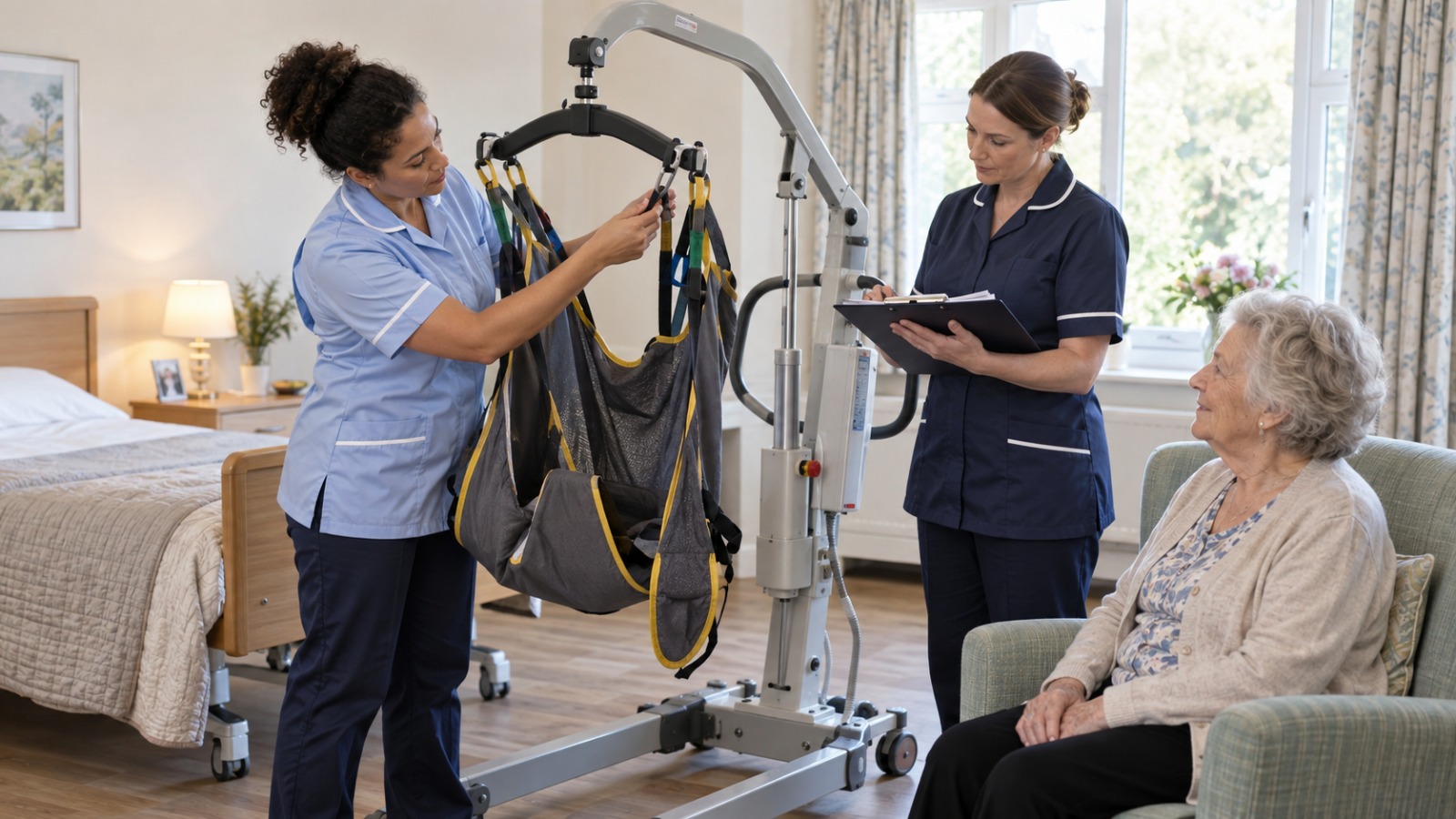
Many domiciliary care workers support people with mobility, transfers or specialist equipment. Moving and handling training should help workers understand safer techniques, risk awareness and the use of relevant equipment where applicable. Employers should also assess practical competence rather than relying solely on completion of an online course.
Medication Administration Training
Where workers support or administer medicines, medication administration training becomes particularly important. Skills for Care’s guidance states that workers with medication responsibilities require appropriate training, while additional learning may be needed for specific medicines or specialist administration such as buccal midazolam. Training should be supported by competency checks and clear limits on what each worker is authorised to do.
Infection Prevention, Health and Safety and First Aid
Domiciliary staff may enter several homes during one shift, each presenting different environments and risks. Infection prevention and control training, health and safety awareness, fire safety and appropriate first aid knowledge can help workers respond more consistently. Lone-working procedures, risk assessments and employer-specific policies should also form part of induction and ongoing development.
What Training Do New Domiciliary Care Workers Need?
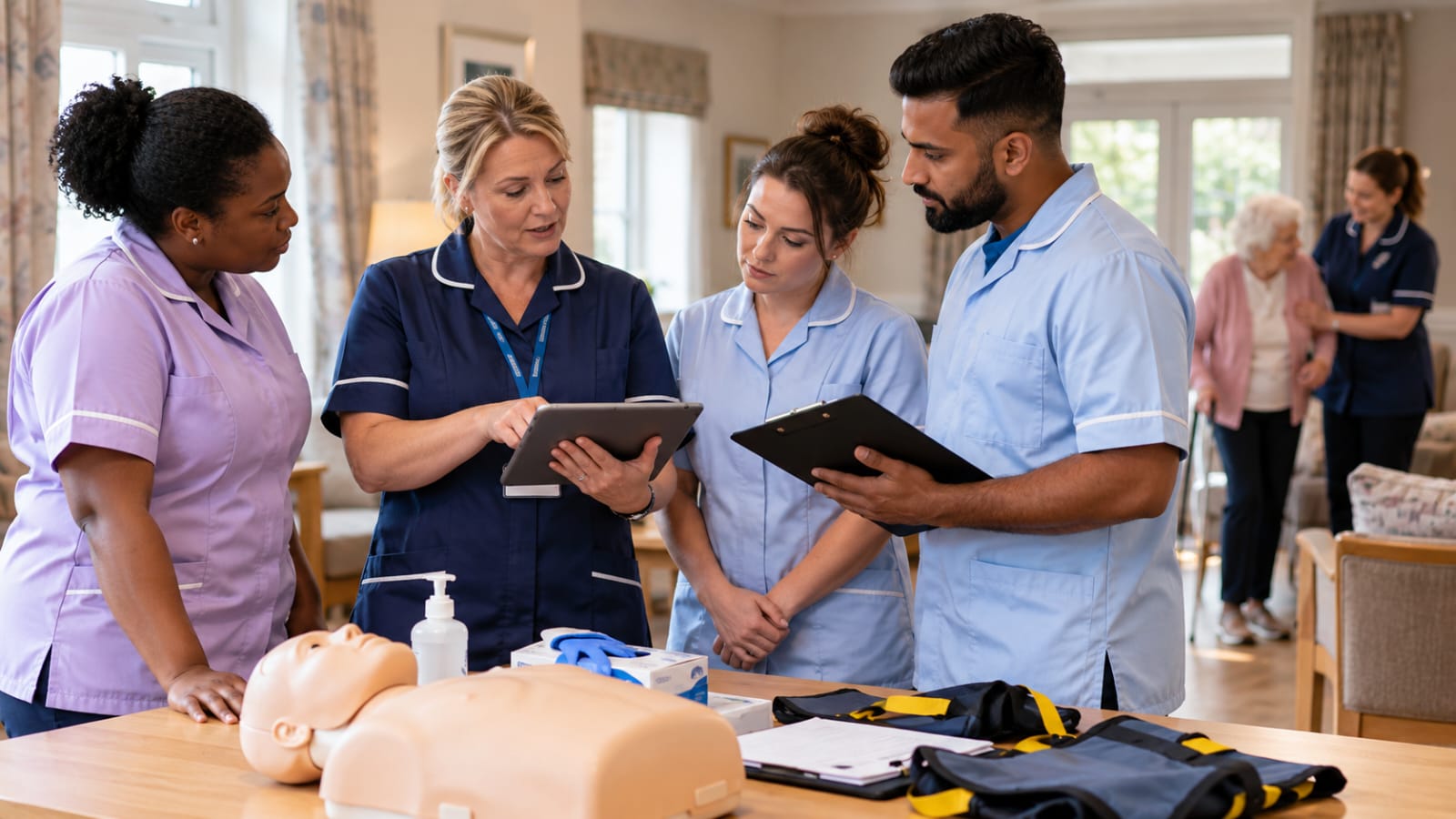
New starters should receive a structured induction rather than simply being given a generic course list. The Care Certificate standards can support induction for relevant health and social care roles. The standards were updated in 2025 and now contain 16 standards, including awareness of learning disability and autism.
Care Certificate training should be combined with workplace orientation, shadowing, supervision and assessment of what the employee can actually do. Skills for Care emphasises assessment of both knowledge and practical application. This is particularly important in domiciliary care because workers often begin working independently in people’s homes.
Specialist Training Should Match Service-User Needs
Home care training should go beyond core subjects. Where a provider supports people living with dementia, autism, learning disabilities, diabetes, epilepsy, mental health needs, end-of-life care requirements or increased falls risk, staff learning should reflect those needs.
Relevant specialist domiciliary care training courses can improve staff confidence and help providers deliver more appropriate support. For example, a worker supporting someone with epilepsy may need more than general awareness if their responsibilities include emergency medication. Similarly, dementia care may require additional communication and person-centred care skills.
How Often Should Domiciliary Care Training Be Refreshed?
There is no universal rule stating that every training course must automatically be repeated annually. Refresher decisions should consider current guidance, organisational policy, staff competence, changes in care needs, incidents, new risks and the nature of the employee’s responsibilities.
Employers should maintain a clear training matrix showing completion dates, review dates, competency assessments and identified learning gaps. For a mobile workforce, this creates a practical system for monitoring care worker refresher training and addressing requirements before important learning becomes overdue.
Managing Training Across a Mobile Home Care Workforce
Because carers work across different locations and shifts, coordinating learning can be challenging. Online domiciliary care training can make knowledge-based courses easier to assign around care visits while centralised records help managers monitor completion.
However, online learning should not replace practical assessment where competence needs to be demonstrated. A stronger approach combines flexible digital learning with supervision, workplace observation and practical competency checks where required.
Building a Safer, More Confident Domiciliary Care Team
A strong training strategy should connect learning with everyday care delivery. Managers should review incidents, complaints, audits and changes in client needs to identify new learning requirements. This turns mandatory training for home care staff from a certificate-based compliance exercise into an ongoing quality-improvement process.
Training Multiple Staff?
For larger teams, online care training for organisations can simplify induction and refresher learning. Learning Connect offers Care Certificate training, mandatory care courses and a 50-course care training bundle, allowing employers to choose learning according to their workforce and service requirements.