Care Home Staff Training Requirements 2026
What Training Do Care Home Staff Need in 2026? Complete Guide for Employers
Care home providers have a clear responsibility to make sure staff are trained, competent and able to provide safe, effective and person-centred care. For employers, understanding care home staff training requirements is therefore not just an HR task; it is an important part of maintaining quality, protecting residents and demonstrating good governance.
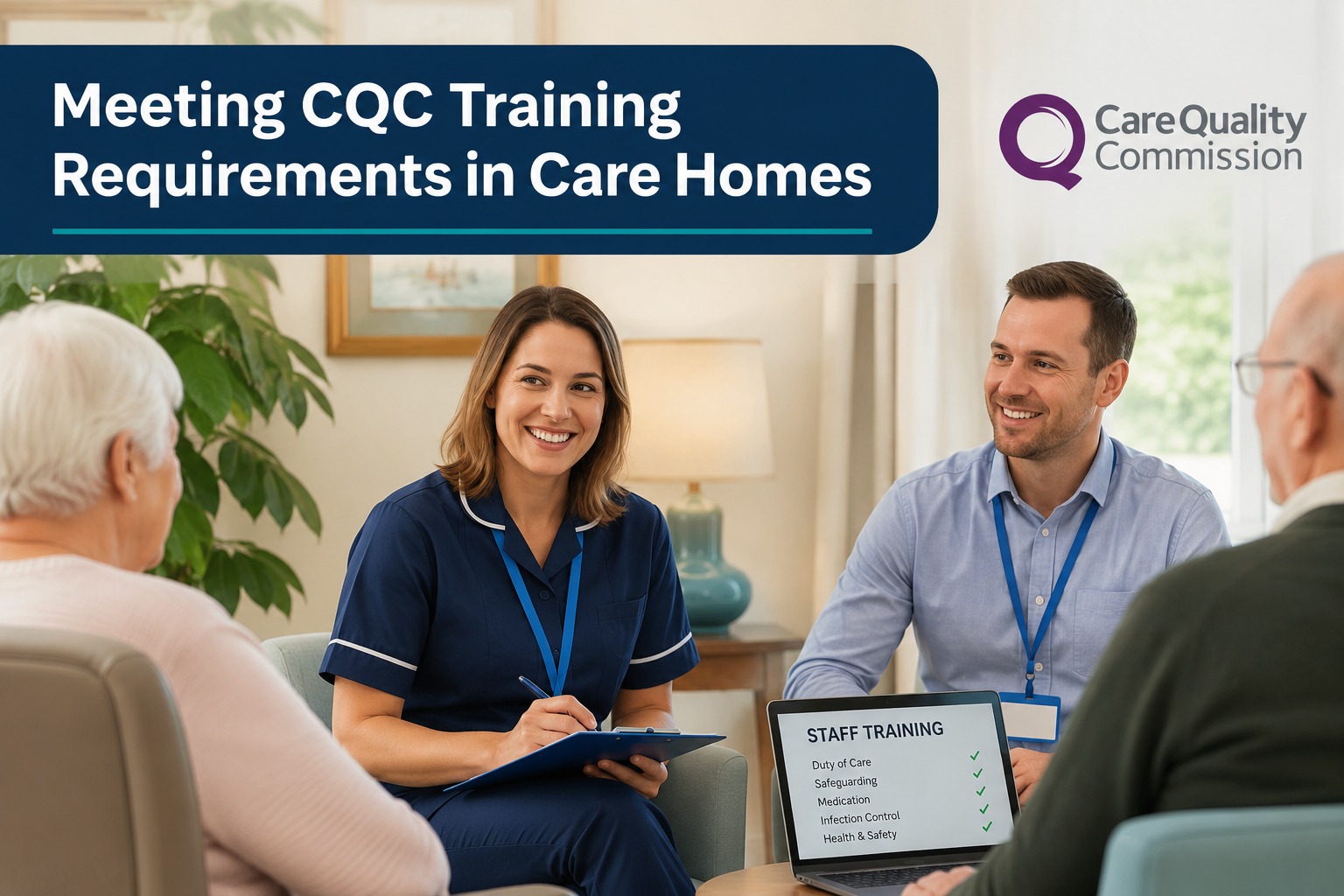
The Care Quality Commission (CQC) states that care homes should have a staff training plan showing how they will meet the Care Certificate standards, statutory and regulatory requirements, role-specific needs and any specialist training required by the people using the service. CQC also expects providers to explain induction arrangements, mandatory training, refresher training and how different job roles will be supported.
What Are the Training Requirements for Care Home Staff?
There is no single identical training programme that applies to every member of staff in every care home. Training should reflect the employee’s role, responsibilities, level of competence and the needs of the people they support. This means an employer caring for people with dementia, learning disabilities or complex health needs may require additional specialist learning beyond its core programme.
CQC guidance says providers should support employees to undertake statutory training, other mandatory training for care workers defined by the provider, and additional learning needed to carry out regulated activities safely. Staff should also receive appropriate supervision while developing new skills and until competence has been demonstrated.
Core Training Courses Care Home Staff May Need
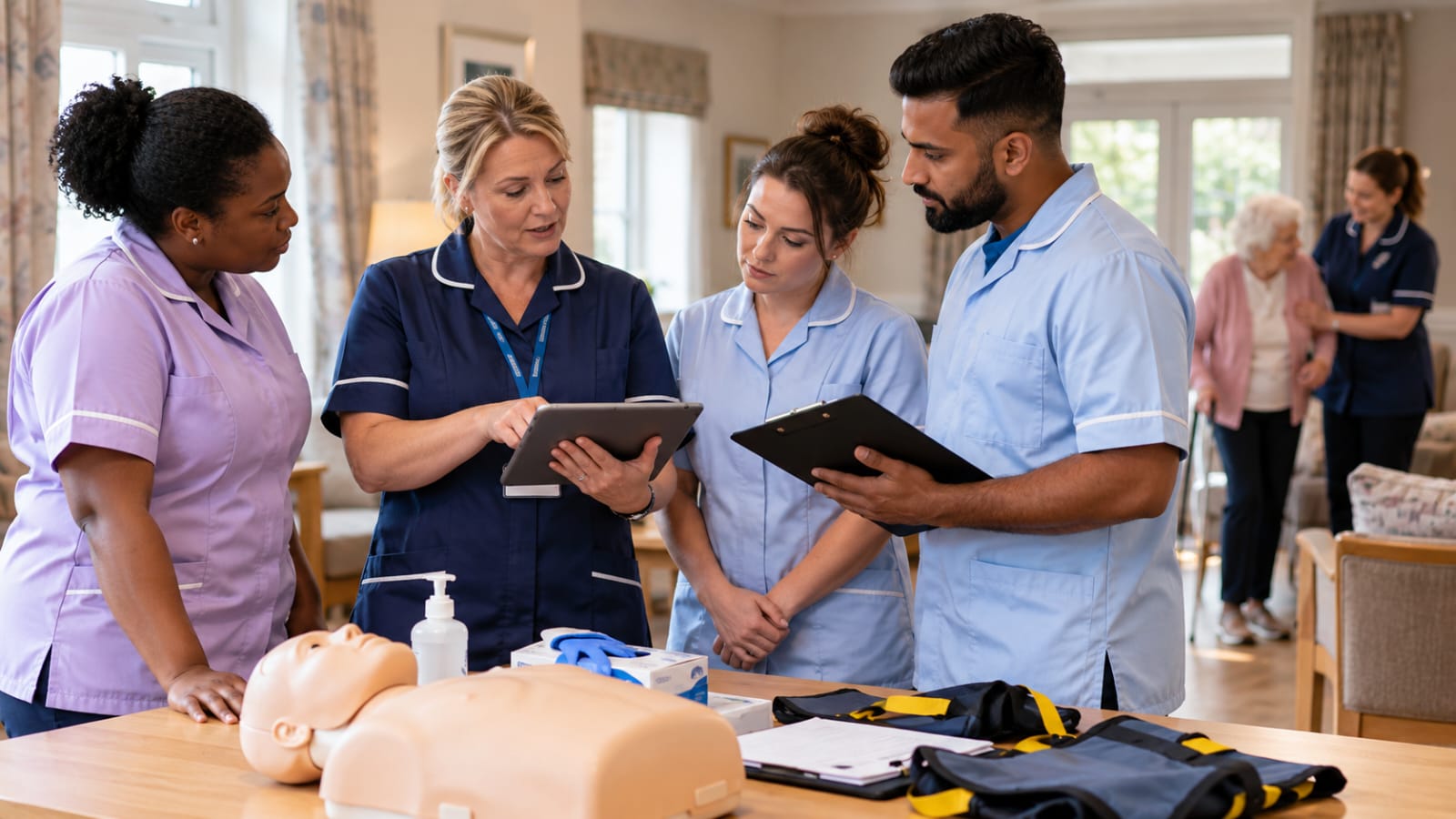
For many providers, a strong care home compliance training programme will include health and safety, safeguarding, infection prevention and control, fire safety, moving and handling, first aid and other subjects relevant to day-to-day care. Skills for Care currently identifies health and safety awareness, fire safety, moving and handling, infection prevention and control, adult safeguarding and child safeguarding among key core topics within its statutory and mandatory training offer. Medication administration and food hygiene may also be required depending on an employee’s duties.
Safeguarding Adults Training
Safeguarding should be treated as a central training requirement. Under CQC Regulation 13 guidance, staff should receive safeguarding training during induction at a level appropriate to their role, and this learning should be updated at suitable intervals. Staff need to understand how to recognise possible abuse, respond appropriately and report concerns.
Moving and Handling Training
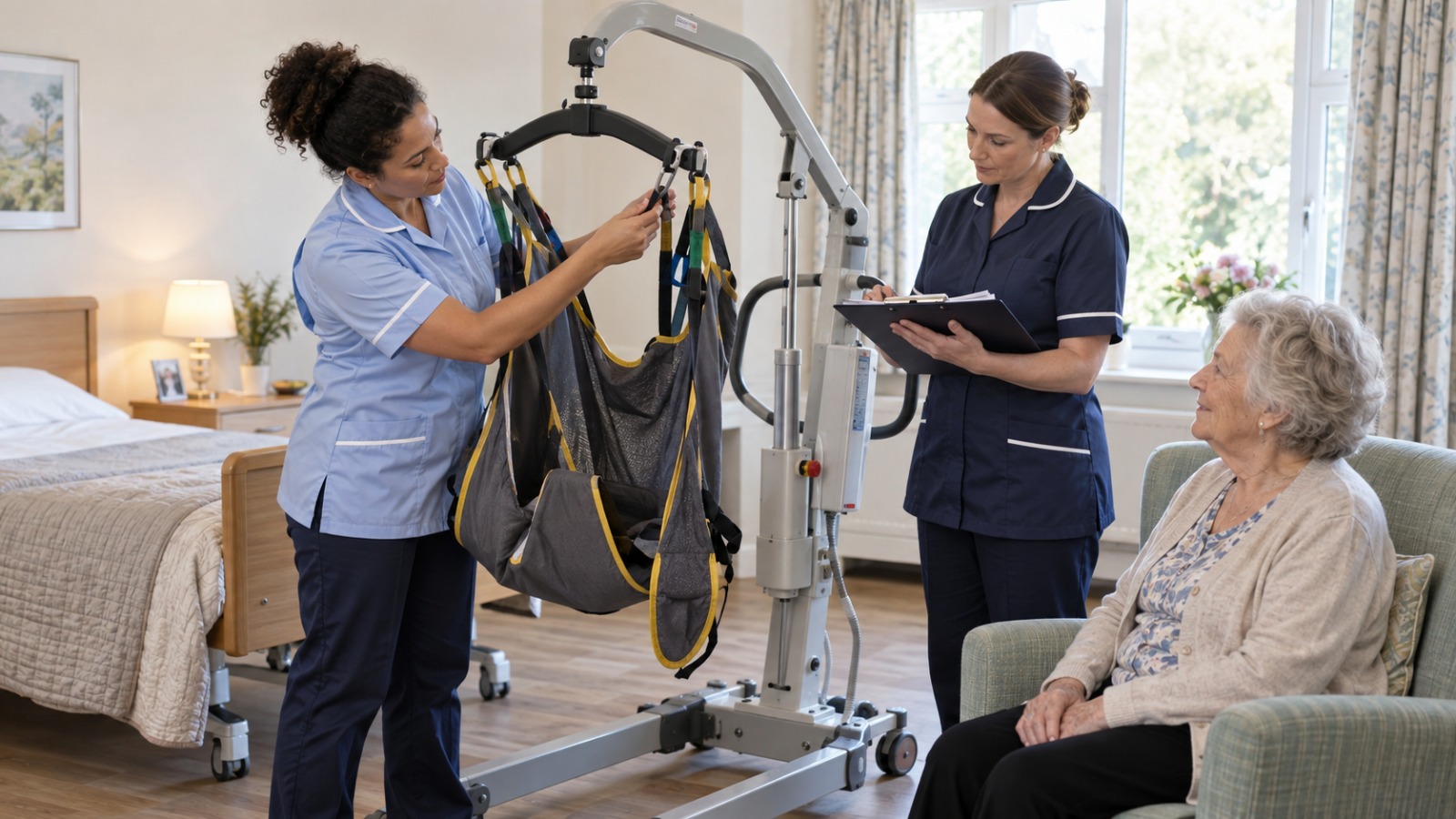
Employees who support residents with mobility or use equipment should receive appropriate moving and handling training. Training should be relevant to the activities staff actually perform, and employers should ensure workers are competent before undertaking tasks without suitable support.
Medication Administration Training
Where care workers are involved in medicines support or administration, employers should provide appropriate medication administration training and assess competence. CQC guidance makes clear that care and treatment should only be delivered by appropriately qualified, skilled and competent staff.
Infection Prevention, First Aid and Fire Safety
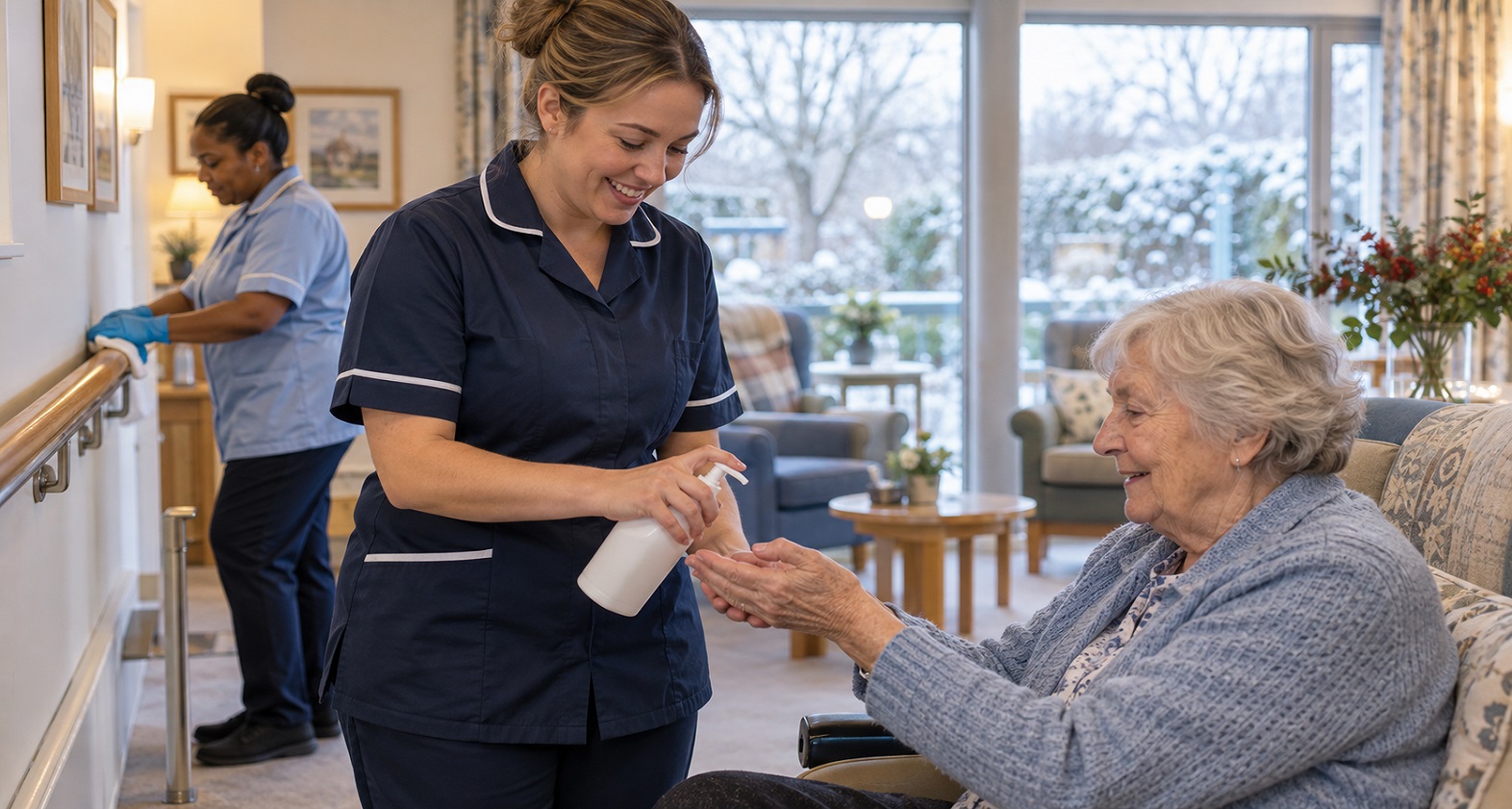
Infection prevention and control training, first aid awareness and fire safety remain important components of many care-home training programmes. These subjects help employees understand everyday risks, emergency procedures and safe working practices. Employers should determine the level of training required according to role, risk assessment and service-user needs rather than relying on a one-size-fits-all approach.
What Training Do New Care Home Staff Need?
New starters should receive a structured induction that prepares them for their responsibilities. For many frontline care roles, the Care Certificate training framework is an important part of induction and provides core standards covering subjects such as duty of care, communication, privacy and dignity, safeguarding, health and safety and infection prevention.
CQC expects providers to explain what their induction includes and what training new employees will receive. It also expects providers to have systems for assessing competence before staff work independently.
Specialist Training Should Reflect the People You Support
A good training plan should go beyond generic courses. If a care home supports people living with dementia, autism, learning disabilities, mental health needs or other specific conditions, staff training should reflect those needs.
Learning disability and autism training is particularly important. CQC confirmed in September 2026 that the training requirement applies to services delivering CQC-regulated activities, with staff expected to receive learning appropriate to their role.
This makes specialist care training for care staff an important part of workforce planning, particularly where residents have complex or changing needs.
How Often Should Care Home Staff Training Be Refreshed?
There is no universal refresher interval that applies to every subject. Employers should consider legislation, regulatory guidance, recognised sector practice, risk assessments, training-provider recommendations and individual competence.
CQC specifically asks providers to show how often refresher training will take place where applicable. Employers should therefore maintain a training matrix showing completion dates, expiry or review dates, competency assessments and future learning requirements.
Online Care Home Training for Organisations
For employers managing multiple workers, online care home training can make induction and refresher learning easier to coordinate. Online learning can support flexible completion, centralised record keeping and consistent access to course material, although practical competency assessments should still be used wherever the role requires demonstration of practical skills.
A broad programme of training courses for care home staff can also help organisations cover both core and specialist learning without purchasing each subject separately.
Building a Stronger Training Culture
The most effective training programmes do more than issue certificates. Employers should connect learning with supervision, competency checks, incidents, audits and residents’ changing needs. Training records should be reviewed regularly so managers can identify gaps before they become operational or regulatory risks.
A well-planned approach to care staff training courses UK requirements can support safer care, stronger staff confidence and better evidence during inspections.