What Is Buccal Midazolam?
Buccal Midazolam is a rescue medication used to stop prolonged epileptic seizures. It belongs to a group of medicines called benzodiazepines, which work by calming abnormal electrical activity in the brain. Understanding How Buccal Midazolam Works helps carers appreciate why rapid administration is essential during a prolonged seizure.
The medication is typically prescribed for individuals who have a history of prolonged seizures or are at risk of developing status epilepticus, a medical emergency where seizures continue for an extended period without recovery.
Many people searching for Buccal Midazolam training, seizure rescue medication, emergency epilepsy medication, and epilepsy seizure management are looking for guidance on the safe use of this medication in real-world care situations.
When Should Buccal Midazolam Be Administered?
Buccal Midazolam should only be administered according to an individual's prescribed care plan, epilepsy protocol, or healthcare professional's instructions.
In most cases, it may be required when:
- A seizure continues beyond the prescribed duration.
- Repeated seizures occur without full recovery.
- The individual's emergency epilepsy care plan advises intervention.
- A healthcare professional has authorised administration.
Every individual may have different treatment thresholds, making it vital to follow documented guidance rather than relying on general assumptions. Carers should also understand When to Call an Ambulance for a Seizure if the seizure continues despite treatment or the person's care plan requires emergency medical assistance.
How Is Buccal Midazolam Administered?
Before administering medication, the individual's safety should always be prioritised. During a seizure, carers should protect the person from injury, monitor the seizure duration, and follow their established epilepsy care plan. Being able to How to Recognise a Seizure accurately is essential before administering emergency rescue medication.
Administration Procedure
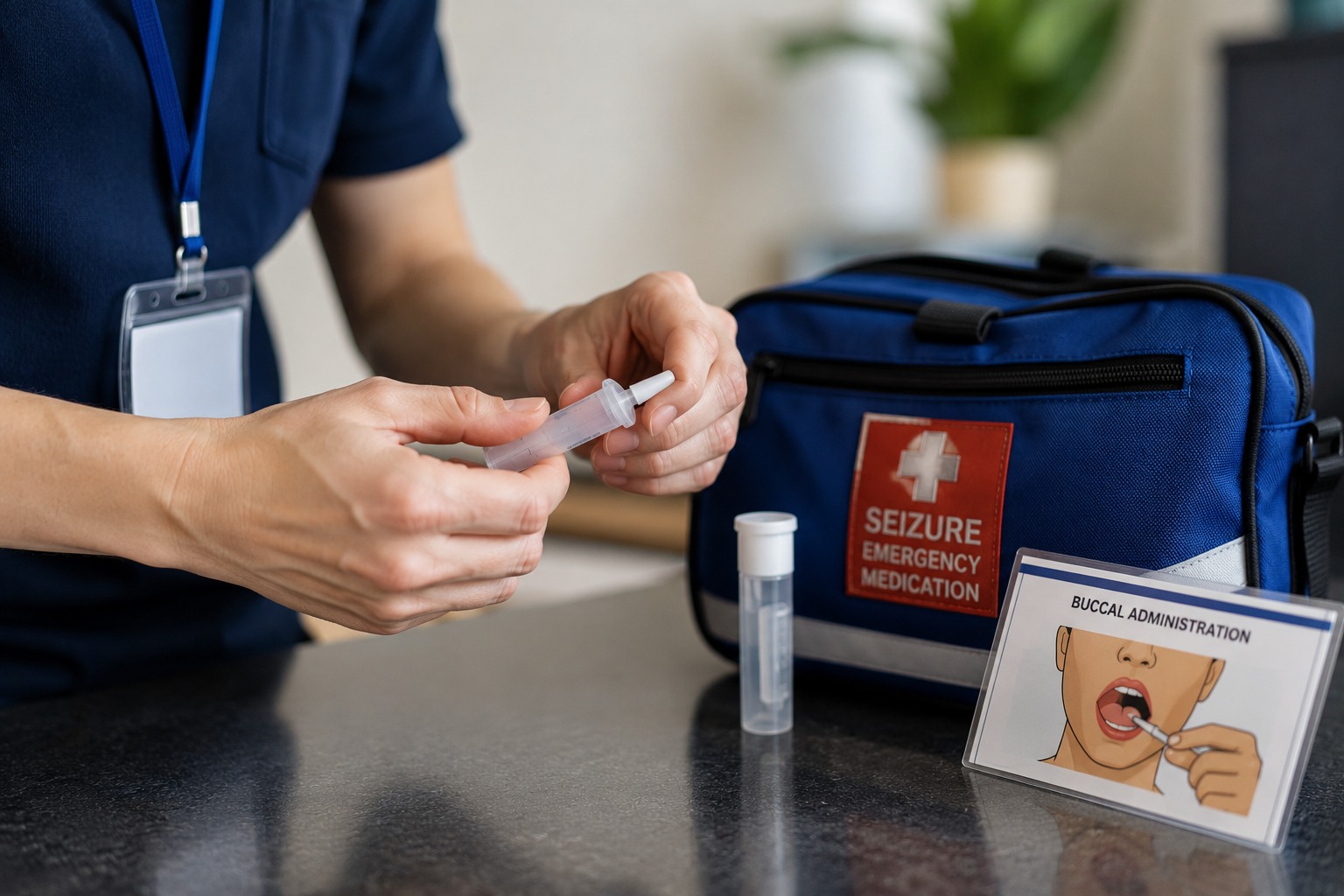
The medication is gently administered into the buccal cavity, which is the area between the lower gum and cheek. The prescribed dose is slowly delivered, allowing absorption through the lining of the mouth.
Healthcare professionals and carers should ensure they have completed appropriate Epilepsy and Buccal Midazolam Training before administering rescue medication.
Key considerations include:
- Confirming the correct individual and medication.
- Checking the prescribed dosage.
- Following organisational policies and procedures.
- Recording the administration accurately.
- Monitoring the individual's condition afterwards.
Monitoring After Administration
Following administration, careful observation is essential. Although Buccal Midazolam is highly effective in stopping seizures, the individual may require ongoing support and monitoring. Understanding Recovery After a Seizure helps carers recognise normal recovery and identify when additional medical support may be required.
Signs that require urgent medical attention may include:
- Continued seizure activity.
- Breathing difficulties.
- Unresponsiveness after the expected recovery period.
- Any concerns outlined in the individual's care plan.
Accurate documentation helps healthcare professionals evaluate treatment effectiveness and supports continuity of care.
Why Training Is Essential
Administering emergency seizure medication requires knowledge, confidence, and competence. Staff working in health and social care environments should understand seizure recognition, emergency response procedures, medication protocols, and post-seizure monitoring requirements.
Completing Epilepsy and Buccal Midazolam Training helps learners develop practical skills in epilepsy management, seizure response, and the safe administration of rescue medication. It also supports compliance with organisational policies and promotes safer care for individuals living with epilepsy.
Understanding the correct administration of Buccal Midazolam can make a significant difference during a seizure emergency. With the right training, carers and healthcare professionals can respond confidently, support individual safety, and contribute to effective epilepsy management.
Frequently Asked Questions
Buccal Midazolam should only be administered by a trained and authorised person following the individual's epilepsy care plan, local policies, and healthcare professional's instructions.
Buccal Midazolam is usually administered when a seizure lasts longer than the time specified in the person's care plan or when repeated seizures occur without full recovery between episodes.
Buccal Midazolam is gently administered into the space between the cheek and gum, where it is absorbed through the lining of the mouth. Always follow the prescribed dosage and care plan.
Monitor the person's breathing, seizure activity, and recovery. Record the administration, follow the individual's care plan, and seek emergency medical assistance if the seizure continues or other concerns arise.
No. Buccal Midazolam should only be given when the individual's prescribed epilepsy care plan indicates it is required. It is not appropriate for every type or duration of seizure.
Training helps carers and healthcare professionals recognise prolonged seizures, administer Buccal Midazolam safely, follow care plans correctly, and respond confidently during seizure emergencies.