Why Seizure First Aid Matters
Epilepsy affects thousands of people across the UK, and seizures can occur in a variety of settings, including homes, workplaces, schools, care homes, and healthcare environments. Providing appropriate first aid helps keep the individual safe, prevents unnecessary harm, and ensures that support is delivered with confidence.
Understanding epilepsy first aid procedures is particularly important for those responsible for supporting individuals with diagnosed epilepsy. Every seizure may look different depending on the type of epilepsy and the area of the brain affected. Some people may lose consciousness, while others remain aware but experience unusual sensations or involuntary movements.
For those seeking a deeper understanding of seizure management and emergency medication administration, our Epilepsy and Buccal Midazolam Training Course provides practical knowledge and guidance for health and social care settings.
What to Do During a Seizure
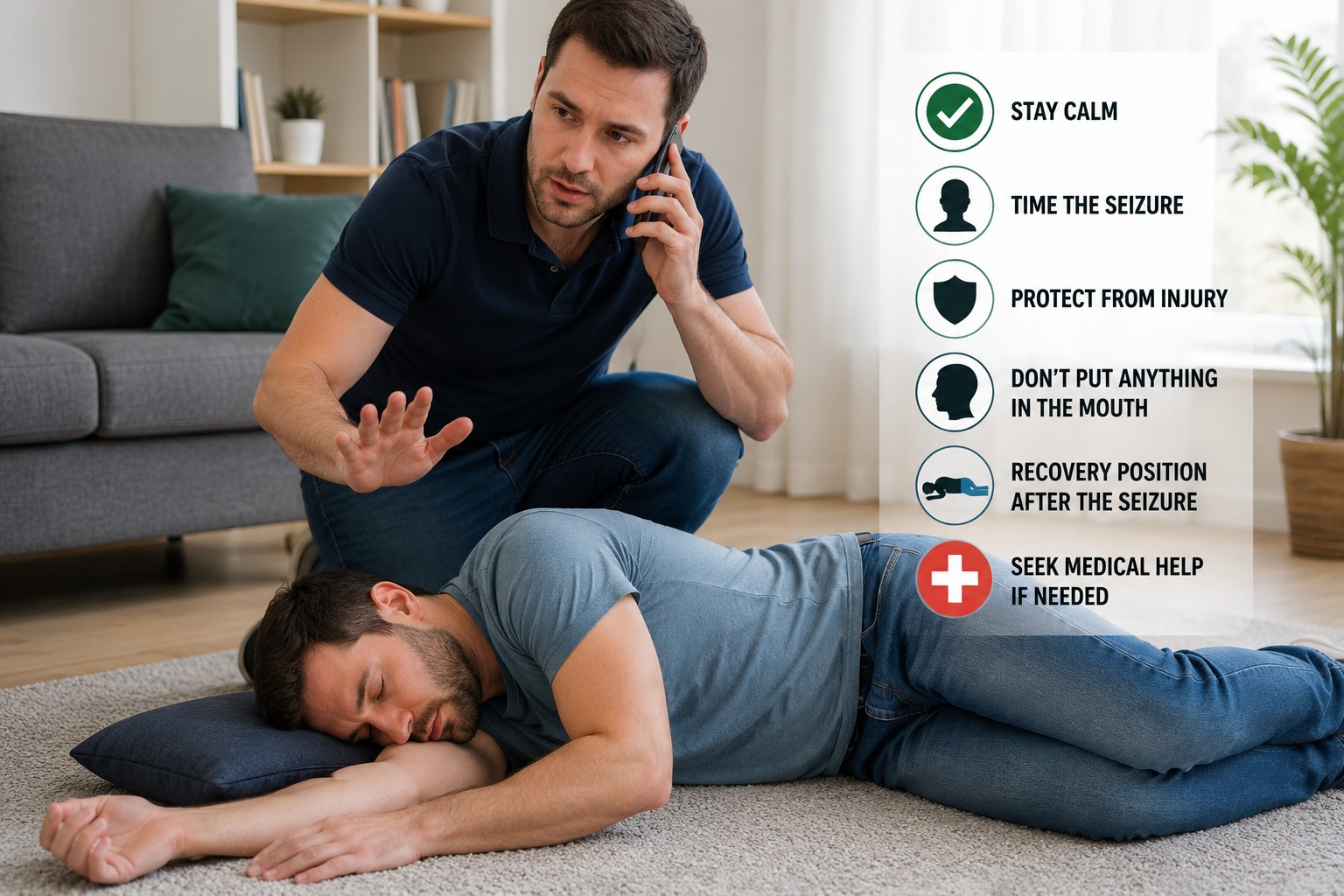
When a person is having a seizure, staying calm is one of the most important actions you can take. Most seizures stop on their own and do not require emergency medical treatment.
Key First Aid Steps
If someone experiences a seizure:
- Stay calm and remain with the person.
- Move nearby objects that could cause injury.
- Protect their head with a folded jacket, cushion, or soft item.
- Loosen tight clothing around the neck if necessary.
- Time the seizure from the moment it begins.
- Allow the seizure to finish naturally.
- Reassure the person as they recover.
These simple actions form the foundation of effective seizure management and can help prevent avoidable injuries.
What Not to Do During a Seizure
There are several common misconceptions about helping someone during a seizure. Taking incorrect actions may place the individual at greater risk.
Avoid These Actions
- Do not restrain the person's movements.
- Do not place anything in their mouth.
- Do not attempt to give food or drink during the seizure.
- Do not move them unless they are in immediate danger.
- Do not try to stop the seizure by force.
Following recognised seizure first aid guidelines helps ensure the person's safety and dignity throughout the episode.
Recovery Position and Aftercare
Once the seizure has stopped and any jerking movements have ended, gently place the individual into the recovery position if they are unconscious or drowsy. This helps maintain an open airway and reduces the risk of choking.
After a seizure, many people experience confusion, tiredness, headaches, or temporary memory difficulties. Providing reassurance and remaining with them until they have fully recovered is an important part of post-seizure care.
People often search for recovery position after seizure and what happens after a seizure because recovery can vary significantly from person to person.
When to Call Emergency Services
Most seizures do not require an ambulance. However, emergency assistance should be sought if:
- The seizure lasts longer than five minutes.
- Multiple seizures occur without recovery between episodes.
- The individual has difficulty breathing afterwards.
- Serious injury occurs during the seizure.
- It is their first known seizure.
- Emergency medication such as Buccal Midazolam may be required according to an agreed care plan.
Understanding these warning signs is a vital component of effective epilepsy emergency care.
Learn More About Epilepsy and Seizure Management
For carers and healthcare professionals, gaining specialist knowledge can improve confidence when supporting individuals with epilepsy. Learning about seizure recognition, risk management, and emergency medication administration helps ensure safer outcomes and better quality care.
These resources provide practical guidance on recognising seizures, responding appropriately, and supporting individuals living with epilepsy in health and social care settings.
Frequently Asked Questions
The correct first aid for a seizure involves protecting the person from injury, moving nearby hazards, placing something soft under their head, timing the seizure, and staying with them until they have fully recovered. Do not restrain them or put anything in their mouth.
No. You should never place anything in a person's mouth during a seizure. Contrary to common myths, a person cannot swallow their tongue, and inserting objects may cause injury or obstruct breathing.
A person should be monitored until they are fully awake, aware of their surroundings, and able to communicate normally. Recovery times vary depending on the seizure type and individual circumstances.
Emergency medical help may be needed if the seizure lasts longer than five minutes, repeated seizures occur, breathing difficulties develop, the person is injured, or it is their first known seizure.
Carers should record the seizure duration, symptoms observed, any injuries sustained, actions taken, and details of the recovery period. Accurate records support ongoing epilepsy management and healthcare assessments.
Effective seizure first aid helps reduce the risk of injury, supports the individual's safety and wellbeing, and enables carers to respond appropriately during epilepsy-related emergencies.